
'In case of shortage of other raw material, like filters and bags, one can try to develop another vendor. However, for chemicals as critical as adjuvants, this is not possible'
This will be an upfront payment for the vaccine doses that these two companies will supply to the government.
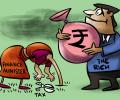
'Quite a few notices have been issued in both black money and benami transactions.'

'The US has invoked the Defence Act and banned export of raw materials.' 'This is as good as banning vaccines.'

The production of Covaxin will increase from the current 10 million doses per month to 60 million-70 million by July-August.
It has taken 51 days to reach a daily caseload of 84,000 from 11,000, as against 85 days taken in the first wave, report Abhishek Waghmare and Sohini Das.

'I don't think anybody would want to be in my position today where every head of State has to be explained that I am prioritising my country because there is a surge in cases.'

The government is considering a provision to provide an exit window to holders of cryptocurrencies (cryptos), keeping in mind that banning them outright could deal a blow to investors sitting on them for years. According to sources in the government, the framework in the making may propose a grace period of three to six months for investors before prohibiting the possession, trading, mining, and issuing of cryptos. A group of secretaries chaired by the Cabinet secretary is learnt to have met in mid-March and discussed issues associated with cryptos, including the consequences of banning them and also on possible substitutes of blockchain technology - an advanced technology Bitcoin uses.

The idea is to do away with the need for the approval of the Core Group of Secretaries on Divestment for privatisation of companies, especially in non-strategic sectors.

Both manufacturers have sought funds in excess of Rs 150 crore under the department of biotechnology's Mission Covid Suraksha scheme. Announced last November, the scheme has an outlay of Rs 900 crore to help develop Covid vaccines, from the clinical development stage to setting up production sites.

'No approval was given to Sputnik V on Thursday. Some queries have been asked on safety, efficacy, and logistics, which the firm will have answers to at the next meeting'

'We expect to get the approval in the next few weeks,' says Deepak Sapra, CEO, API and pharmaceutical services, Dr Reddy's Laboratories (DRL).
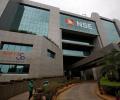
Sebi had, in February, dropped allegations of fraudulent and unfair trade practices against NSE's former heads Ravi Narain and Chitra Ramakrishna in the co-lo case.
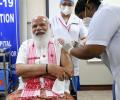
'He came back from the US only to work for his country.' 'He has invested his fortunes to build this company and is married to his work.' 'Rarely does one see such commitment.'

The government has brought in changes to the investment pattern for non-government provident funds, and superannuation and gratuity funds, enabling them to invest up to 5 per cent in the units of Category I and Category II alternative investment funds (AIFs), subject to some caveats. The development is part of the central government's strategy to channelise domestic savings and improve their returns to attract more investment in the said sectors. At present, these funds typically invest a minimum 45 per cent in government securities, besides new instruments, such as exchange-traded funds and real estate investment funds, while a portion in equity-related instruments.

Government-controlled oil-marketing companies (OMCs) have held back petrol and diesel price revisions for a week and are expected to continue doing so, ostensibly owing to political reasons. It appears that the Centre has informally conveyed to the three major OMCs to not revise fuel prices for the time being, two people in the government said. This informal directive follows the talks between the Centre and states on cutting taxes and bringing the auto fuels under the good service tax regime not fetching the desired results, so far.

Sources said about hundreds of companies, including Facebook and Amazon, could seek tax refund because they import software for sale in India.
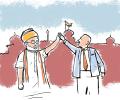
The Centre is likely to privatise profit-making enterprises, reversing its previous position of first closing or merging loss-making state-run units. The NITI Aayog, which is in the process of selecting public sector units for privatisation, is likely to put out its first list, focusing on companies in non-strategic sectors, along with those that have got Cabinet approval for stake sale, or are in final stage of due diligence. "The shortlisted firms will be put out in three-four tranches, with the first list comprising non-strategic ones, followed by strategic sectors with a focus on privatisation and not divestment," said a senior government official privy to the plan. He said the first report was expected in early April. The think tank approach is in sync with the government's new strategies on privatisation and asset monetisation.

The Securities and Exchange Board of India's (Sebi's) technical advisory committee has been mandated to probe the trading halt at National Stock Exchange (NSE) and fix accountability. The committee after a detailed examination would send its findings and recommendations to whole-time member Madbhi Puri Buch, to decide the future course of action, said two people in the know. The panel, which is currently chaired by Ashok Jhunjhunwala of IIT Madras, is learnt to have sought an explanation over two key issues from NSE: One on the effectiveness of interoperability as it was unable to migrate the trading positions; the other on laxity in switching it to the disaster recovery site.
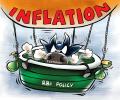
'While intensification of fuel prices and broad-based domestic cost pass-through pressures is a downside risk, core inflation is expected to strengthen further as demand recovers to pre-Covid levels,' the ministry said on Friday.
 © 2026 Rediff.com - Advertise with us - Disclaimer - Privacy Policy - Sitemap - Feedback - About us - Terms of use - Grievances